
What stage are you currently at?

Do you have building plans and specifications? Call Waldroop Steel today at (572) 206-3804 or send your plans and specifications to sales@waldroopsteel.com. Our staff will review your plans and specifications and produce a quote for your review.
Are you unsure of where to start? Moving too quickly without understanding the bigger picture can result in increased costs at different stages of the overall process. Many variables are present in the building and foundation design process alone and it is important to have a full understanding of the information needed so you can obtain accurate quotes up front and avoid big cost changes at later stages. See below for things to consider so your metal building process can be seamless and smooth as possible.
What will the local building and construction department allow?
- Restrictions on the type and amount of exposed steel on a building?
- Overall size and height restrictions? Some zoning requirements may have minimum or maximum square footage requirements. Zoning will often determine how tall a structure can be so you'll need to be aware of not exceeding that allowable height.
- Designated property line setbacks and/or easements to consider?
- Specific building use requirements?
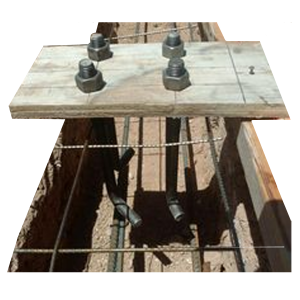
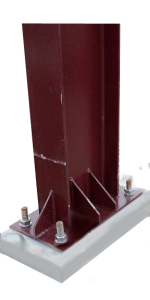

What is the difference between anchor bolt layouts and foundation plans? Anchor bolt layouts are provided by the metal building manufacturer. Steel columns have base plates with holes for anchor bolts that secure to the slab. Anchor bolt layouts allow the contractor to place templates holding the anchor bolts before the concrete is poured where each main frame column will be located. Waldroop Steel or the metal building manufacturer will specify the diameter of the anchor bolt but not the length. Here is where the structural engineer and foundation plans enter the picture.
Foundations & Geotechnical Considerations

Various factors determine what soil conditions may be present in a given area. Soil characteristics can vary from location to location which can cause soil bearing capacities to also change. How much bearing pressure a soil can accept before being pushed to failure is very important in determining whether the reactions of an engineered steel building design will be within the performance capabilities of the soil. This geotechnical data forms the basis for foundation plans. The concrete contractor is able to correctly place and pour the piers with the designed size and depth in accordance with the building design reaction requirements. Foundation plans will also include data on other related items such as footings, grade beams, rebar, wire mesh, underlayment, and hair pins.
Foundation plans work in conjunction with plans supplied by the metal building manufacturer. Waldroop Steel can provide building reaction data that can be used by the structural engineer to produce preliminary foundation designs. This in turn allows you, as the client, to request foundation quotes. The data will be preliminary and subject to change until stamped building reactions can be produced.
Trim Styles and Details
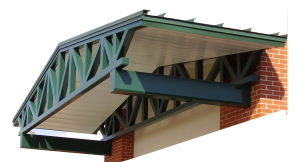
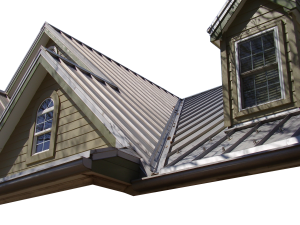
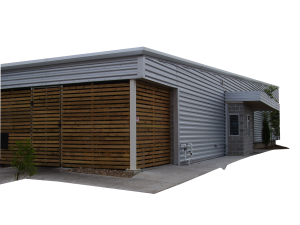
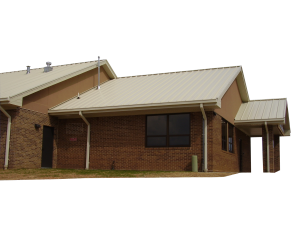
Most metal building manufacturers have standard profile trim offerings. Trim profiles are typically fabricated to work together at junctions. Pre-fabricated pieces such as corners are available, however, details are typically cleaner and fit more accurately when mitered in the field. Custom profiles are also available and Waldroop Steel Buildings can help determine if your custom profile can be fabricated according to your drawing or if any adjustments may be needed. Trim parts can be made in any length (up to approx. 20'2) and are typically provided in 10' and 20' sections. This results in a lap joint so depending on your building dimensions, it is important to consider the aesthetics of where you would like your lap joints to occur. Areas of special consideration are wall corners, downspouts, openings, gutter, gables and roof flashings that are integral to a steeper slope roofing system and visible from the ground. It is also important to clarify if the metal building manufacturer will be providing full trim for wall openings. This would include jamb and head trim around the opening and also full cover trim that fits over the opening framing (typically 8 inches).
Trim types for the roof vary depending on the type of roofing system being used. Standing seam systems are typically through fastened at one end and have a floating system at the other end. Building designs with long panel runs may require a mid lap and expansion joints are often recommended for things such as an offset eave line over a certain dimension. These and many other types of details will require complex trim conditions so the system performs per design and remains weathertight. Exposed fastener or "screw down" roof systems are simpler in design but still need careful consideration to the types and styles of trim that will best perform for your building scope.